
JournalContributor hub
Ecosystem Contributor Hub
Content created by ecosystem contributors that reflects their own insights and perspectives.






Execution Layer Meets Data Availability: The Synergy of Linux Runtimes and High-Throughput DA
Explore the 2026 modular ecosystem where the Cartesi Machine handles the heavy lifting for high-compute dApps. By complementing EVM with a full Linux environment, builders are climbing the "Cone of Innovation" toward use cases like Decentralized AI and world simulators. Pairing this execution power with high-throughput DA solutions like Avail or Ethereum’s Pectra upgrade provides a stack that finally matches Web2 performance without sacrificing a decentralized ethos.


What’s Next for Social Appchains?
Web3 social apps are evolving fast, combining the familiarity of Web2 with the openness and decentralization of Web3. Cartesi appchains empower builders to create rich, complex social experiences, including collaborative content, AI-driven interactions, and gamified communities, while keeping everything secure and verifiable on-chain. Projects like Scribbl, where AI judges doodles in a decentralized and transparent way, show how Cartesi opens new possibilities for social apps and creative ecosystems.


Best of Both Worlds? A Measured Review of Non-Interactive ZK Fraud Proofs
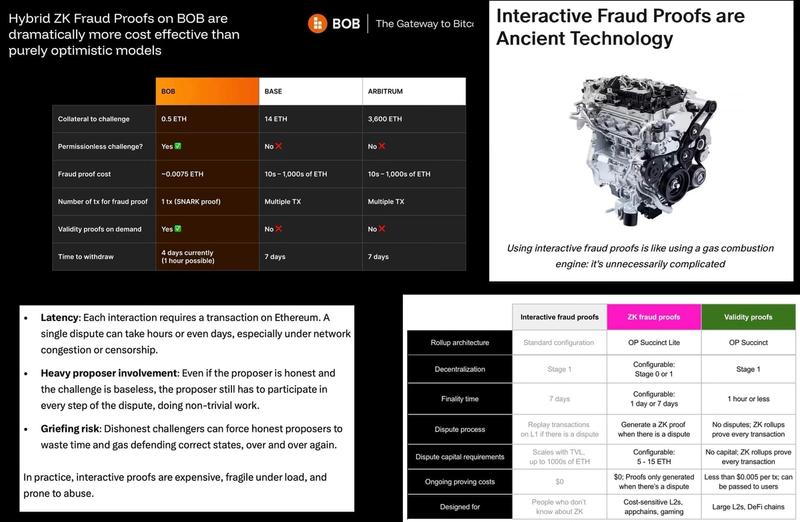
Recent advances in Non-Interactive (NI) ZK Fraud Proofs, like Kailua and OP Succinct Lite, promise faster withdrawals and lower costs for optimistic rollups. We rigorously steel-manned NI designs against a strong threat model and compared them to Interactive Fraud Proofs (like Dave) and ZK Validity Proofs. Our analysis finds that current NI systems are vulnerable to Sybil attacks, coordination failures, and resource exhaustion, preventing true 1-of-N liveness and undermining decentralization. While NI may hold promise, they do not currently deliver the “best of both worlds,” and Interactive Fraud Proofs remain more resilient and cost-effective under adversarial conditions.

Expressive and Secure DeFi Appchains with Cartesi
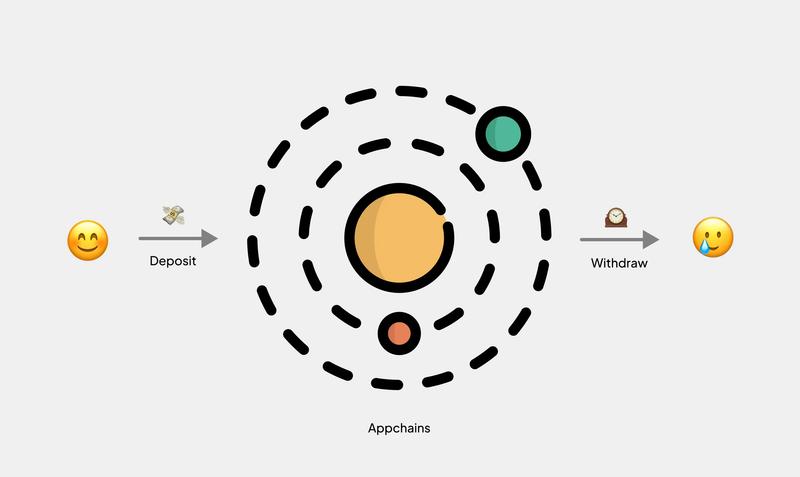
Appchains offer customizable, application-specific blockchains that solve high fees, slow transactions, and UX issues on shared networks like Ethereum. With Cartesi Rollups, developers can quickly deploy appchains anchored to Ethereum, benefiting from low costs, flexible governance, and robust fraud-proof security. While withdrawal delays exist, many DeFi applications, such as staking, yield farming, and reputation-based lending, naturally align with longer timelines, making optimistic rollups a practical and secure choice for building scalable, feature-rich apps.



Cartesi Rollups 2.0 Features Spotlight: Multi-DApp Support
Cartesi Rollups 2.0 introduces Multi-DApp nodes, enabling a single node to run multiple applications in parallel. This evolution improves cost efficiency, simplifies node management, and lays the foundation for a scalable, production-grade execution layer where applications and incentives co-evolve.



Exploring Cartesi Honeypot & its PRT Integration
The Cartesi PRT Honeypot is a security challenge built on the Cartesi Rollups framework, where anyone can deposit assets but withdrawals are restricted. It showcases the PRT fraud-proof system, combining on-chain contracts and off-chain nodes to ensure secure, decentralized validation. Participants can test the system, gain technical insights, and earn CTSI rewards.



PRT FRAUD PROOF FOR NON-MATHEMATICIANS
The need to scale programmable blockchains has created a strong demand for secure ways to offload computations outside the blockchain. One of the most popular options today is called rollups. Rollups involve off-chain nodes executing these offloaded computations, then proving the results back to the base layer. This is a good approach to solving the scalability issue, as these off-chain computers are not constrained by the limitations of the blockchain network. They, therefore, can be more specialised, faster and better equipped to handle complex transactions.



The Dave Fraud-Proof Algorithm
The Dave algorithm is a next-generation fraud-proof system that balances decentralization, security, and liveness. It allows anyone to participate, withstands Sybil attacks, and resolves disputes efficiently, proving that optimistic rollups can remain secure even against powerful adversaries.


Enforceable Human-Readable Transactions: how to solve Bybit-like hacks
The $1.5 billion Bybit hack exposed a flaw in Ethereum’s transaction signing: humans can’t read raw transaction data. This post proposes embedding human-readable descriptions in EIP-712 messages, letting users verify actions before signing. The approach improves security without protocol changes and works especially well on Layer 2s or Cartesi appchains.